The project
What SLRE is, how the Digital Twin, Storylines and the Interactive Solution Room work together, and who is behind it.
About SLRE
Transfer by Design
Digital Twin
System knowledge
- Hydro-economy
- Hydrological modelling
Storylines
Target knowledge
- Real-world application
- Conflicting needs
Interactive Solution Room
Transformation knowledge
- Relevant, actionable information
- Robustly assessed solutions
Solution Lab Rur Erft (SLRE) is a collaborative research, development, and co-design project for the Rur-Erft region. Supported by the Helmholtz Water Initiative, SLRE brings together scientific modeling, digital infrastructure, and practical experience from stakeholders in administration, water management, agriculture, and related sectors. The project aims to turn complex hydrological questions into understandable storylines that help people explore possible futures, compare risks, and identify robust options for action. In particular, SLRE focuses on extreme water events such as multi-year droughts, floods, and rapid runoff events, and on how these phenomena affect groundwater, surface water, agriculture, ecosystems, and water allocation.
SLRE is built around three parts: the Digital Twin, co-designed Storylines, and the Interactive Solution Room. The Digital Twin provides the technical foundation by connecting models, data, emulators, databases, and visualizations. The co-designed Storylines ensure that the questions, priorities, and experience of stakeholders shape what is explored. The Interactive Solution Room is the shared space where these elements come together for exchange, interaction, and joint interpretation of results, with AI agents carrying the conversation between the people in the room and the models. In this sense, SLRE follows a Transfer-by-Design approach: knowledge transfer is built into the project from the start.
By combining interdisciplinary science with a strong regional focus, SLRE aims to establish a practical framework for knowledge transfer in water-related decision making. The project is intended not only to address key challenges in the Rur-Erft region, but also to demonstrate how digital tools and stakeholder collaboration can support resilient water management under changing climate conditions. Looking ahead, the approach is designed to be scalable beyond individual catchments, with potential application at national, continental, or even global scales, and to be transferable to different models as well as different stakeholder groups. In this way, SLRE serves as both a regional solution lab and a test bed for future approaches to interactive environmental modeling.
How it works
Digital Twin
The models below form the core of the SLRE Digital Twin. Rather than a fixed simulation pipeline, this ensemble is designed to be steered from the outside: the questions stakeholders bring, the interventions they want to explore, and the storylines developed through co-design all shape what gets run, at what resolution, and with what assumptions. The goal is a modelling system that is as responsive to real-world decisions as it is to scientific ones.
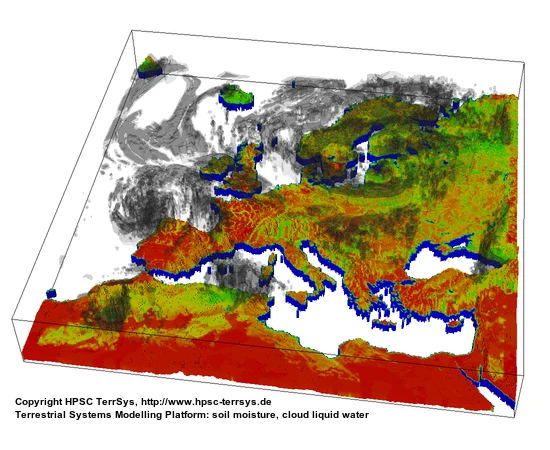
Climate
- Regional climate modelling
- Integrated climate services
- Numerical weather prediction
- Forecasting
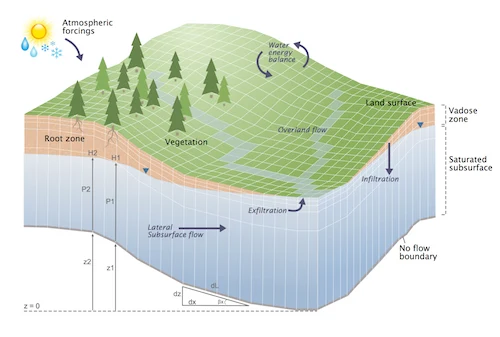
Surface & subsurface hydrology
- Soil water content
- Groundwater recharge
- Runoff and discharge
- Irrigation demand
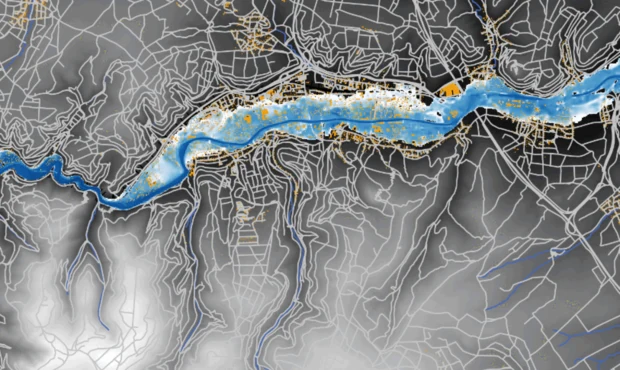
Hydraulics
- Flood area
- Flood depth
- Impact maps
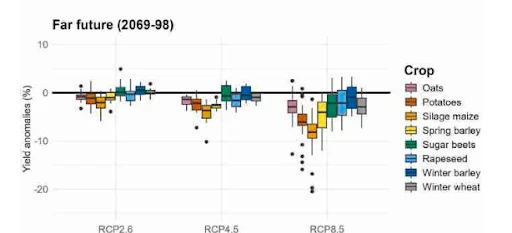
Agriculture
- Crop yield
- Crop type adaptations
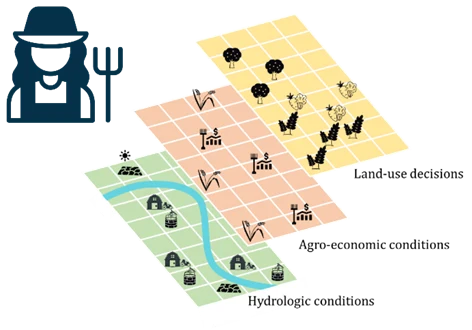
Socio-economy
- Agent-based modelling
- Adaptive land-use decisions
- Irrigation demand
- Irrigated area
Storylines

Water management starts with questions, and in SLRE those questions come from the people who work with water every day: farmers, water authorities, municipalities and regional planners. We ask what they need to know, and their answers decide what the models are used for.
A storyline is one of those questions, written precisely enough for a model to answer it. It names the conditions the region cannot control, such as a run of dry years or a rise in irrigation demand, and the options it can decide on, such as new storage, a change in abstraction rules or a priority for irrigation. For example: what happens to groundwater and to yields after several dry years if irrigation keeps growing, and what does a managed aquifer recharge scheme change for the farms downstream?
Storylines are made in workshops and in smaller meetings, and they are revised as the group learns more. That is what Transfer-by-Design means here. The questions come from practice, and the people who asked them stay involved while they are answered, so the work feeds back into decisions the region can actually take.
Interactive Solution Room
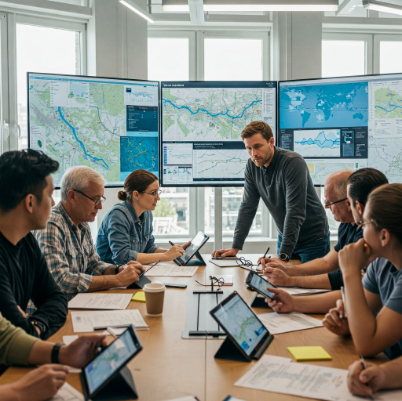
The Interactive Solution Room is where a storyline is worked through with the models in the room. It exists as a physical meeting room and as a digital workspace, and a session usually means a group around a screen with someone from the project team guiding it.
The group changes something and looks at what follows. A crop rotation, a weir setting, a limit on abstraction during a dry spell: each one is entered, the models run, and the result appears on the maps and charts in front of the group. Agent-based components show how individual farms or operators react, so the chain from a decision to its effect on water and yield can be followed step by step, down to the number in the final table.
Questions can also be asked in plain language. AI agents pass them to the models, bring the answer back together with the storyline it belongs to, and keep visible which model and which assumptions produced it. The models themselves can be exchanged: a detailed one for a single site, a fast one for the whole state, running in the cloud or on the machines in Jülich.
A session usually ends with a sharper question, a revised storyline, or a note on what the models still leave out. That loop between the people who decide and the models that compute is what the room is for.
Team
Partners
The SLRE Team consists of collaborators from four Helmholtz research centres.




Stakeholders
Our stakeholders and supporting organisations: